Group Contract Template

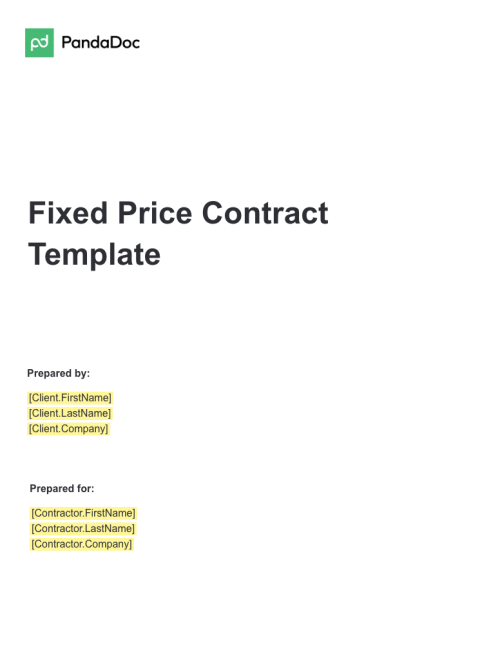
Prepared for:
[Member1.FirstName][Member1.LastName]
[Member2.FirstName][Member2.LastName]
[Member3.FirstName][Member3.LastName]
Prepared by:
[Member4.FirstName][Member4.LastName]
Prepared for:
[Member1.FirstName][Member1.LastName]
[Member2.FirstName][Member2.LastName]
[Member3.FirstName][Member3.LastName]
Prepared by:
[Member4.FirstName][Member4.LastName]
To create a group contract, you want to include the following:
Identify the purpose, members, roles, responsibilities and duties of the group members — and create a basic structure.
Outline the ground rules for communication, meeting and decision-making processes, expectations, and consequences of non-compliance.
Create timelines and deadlines for each task or project.
Determine how decisions will be made — individually, by a majority vote, or unanimously.
Describe required potential contributions, like time, money, and skills.
Use PandaDoc’s group contract template to create a professional group contract in minutes!
A group contract is a binding document drafted by a group with a specific goal or project in mind. It could be a business agreement or a simple group project. Essentially, it’s an agreement laying out the purpose, goals, expectations, roles, and responsibilities of each group member. Group contracts create a sense of camaraderie and accountability among members while ensuring a standard level of professionalism. It reduces conflict and ensures proper communication, collaboration, and successful completion of the group’s project or goal.
Using a group contract has four primary benefits:
It is a powerful way to ensure group members are aware of, and comply with, all parties’ expectations.
It sets out the guideline for the group’s conduct and helps create a healthy and honest working environment.
It ensures that all parties adhere to their responsibilities, which helps reduce conflict and improve productivity.
Finally, it can help to build trust and establish a sense of accountability within the team.
The point of a team contract is to establish what success looks like among the members of it. It spells out the roles, responsibilities, and expectations of each team member and lays out the ground rules to avoid conflicts. It helps create a culture of accountability and ensures that each team member is on the same page.
Four important elements of a team contract are a clear purpose, defined roles and responsibilities, setting expectations (for communication, accountability, and time commitment), and lastly, a dispute resolution process.
Disclaimer
Parties other than PandaDoc may provide products, services, recommendations, or views on PandaDoc’s site (“Third Party Materials”). PandaDoc is not responsible for examining or evaluating such Third Party Materials, and does not provide any warranties relating to the Third Party Materials. Links to such Third Party Materials are for your convenience and does not constitute an endorsement of such Third Party Materials.